PARKER BPDFS357Y Port Diagnostic Couplings Body 15171-1 1/8
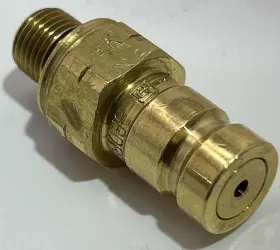
( Brand: Parker ), ( Manufacturer Part Number: BPDFS357Y ), ( Part Type: Diagnostic )
Review PARKER Test Port Diagnostic Quick Couplings Iso Pd Series 1/8 Body
Introducing the Parker BPDFS357Y Port Diagnostic Coupling, a versatile and essential component in any fluid power system. This coupling, conforming to ISO 15171-1 PD 1/8 standard, is engineered for port diagnosis and communication, making it an indispensable tool for maintenance and troubleshooting.
The body of the Parker BPDFS357Y is meticulously crafted from high-quality materials, ensuring durability and reliability even in the most demanding environments. Its compact 1/8 NPT thread size makes it suitable for a wide range of applications, from small hydraulic systems to large industrial installations.
This diagnostic coupling features a unique design that allows for the insertion of various diagnostic tools, such as pressure gauges, flow meters, and temperature sensors, directly into the fluid system. By enabling real-time monitoring of pressure, flow, and temperature, the Parker BPDFS357Y facilitates efficient problem identification and resolution, reducing downtime and increasing productivity.
Moreover, the Parker BPDFS357Y is built with a pressure tight seal that ensures a leak-free connection, even when under high pressure. This feature not only prevents fluid loss but also protects the system from contamination, ensuring consistent performance and prolonging the life of the components.
The coupling's PD symbol signifies its compliance with the latest Pressure Diagnostics requirements, ensuring seamless integration with modern fluid power systems. With a focus on both functionality and ease of use, the Parker BPDFS357Y Port Diagnostic Coupling is a must-have for anyone working with hydraulic or pneumatic systems, providing valuable insights into system health and performance.
In summary, the Parker BPDFS357Y Port Diagnostic Coupling is a high-performance, compact, and reliable solution for fluid power system maintenance and troubleshooting. Its ISO 15171-1 PD 1/8 standard compatibility, unique design for port diagnosis, and pressure-tight seal make it an indispensable tool for optimizing system performance, reducing downtime, and increasing productivity.
Pros and Cons of Buying Parker BPDFS357Y Port Diagnostic Couplings (ISO 15171-1 PD 1/8 Body)
Introduction:Parker BPDFS357Y Port Diagnostic Couplings are a popular choice for those requiring ISO 15171-1 compliant couplings for industrial applications. These couplings offer several benefits, but they also come with certain drawbacks. In this article, we will discuss the pros and cons of investing in Parker BPDFS357Y Port Diagnostic Couplings.
Pros:1. Compliance with ISO 15171-1: These couplings adhere to the international standard for industrial fluid connections. This ensures interoperability between various systems and components.
2. Diagnostic Capability: The Parker BPDFS357Y couplings come with a diagnostic feature that allows users to identify leaks, contamination, and other issues in the fluid system. This can lead to early problem detection and prevent costly repairs.
3. Flexibility: These couplings can be used in a wide range of applications, including hydraulic, pneumatic, and water systems. This makes them a versatile investment for various industries.
4. Durability: Parker BPDFS357Y couplings are made from high-quality materials that ensure long-lasting performance. They can withstand high pressures and temperatures, making them suitable for heavy-duty applications.
Cons:1. Cost: Compared to standard couplings, the Parker BPDFS357Y Port Diagnostic Couplings are more expensive. This can be a significant investment for smaller businesses or projects with limited budgets.
2. Complexity: The diagnostic feature of these couplings may require additional training and expertise to use effectively. This can add to the overall cost and time required for installation and maintenance.
3. Size: The larger size of these couplings may not be suitable for all applications where space is a constraint. This can limit their use in confined spaces or applications where size is a critical factor.
Conclusion:The Parker BPDFS357Y Port Diagnostic Couplings offer several benefits, including compliance with international standards, diagnostic capability, flexibility, and durability. However, they also come with some drawbacks, such as cost, complexity, and size. Ultimately, the decision to invest in these couplings depends on the specific requirements of your application, budget, and expertise. If your application demands the diagnostic capabilities and compliance with international standards, these couplings may be a worthwhile investment. However, if cost and size are significant factors, standard couplings may be a more suitable option.
Recommendation:For applications that require ISO 15171-1 compliant couplings and diagnostic capabilities, the Parker BPDFS357Y Port Diagnostic Couplings are a recommended choice. However, businesses and organizations with limited budgets or space constraints may want to consider standard couplings as a more cost-effective alternative. It is essential to evaluate the specific requirements and limitations of your application before making a final decision.
Details:
Couplets and nipples are available in 1/8 size with a rated pressure of 6,000 psi when connected. Port Ends: Female NPTF, UNF, Male NPTF. Nipples are also referred to as Kampuchea fittings. PD Series Couplets diagnostic test port connectors 6,000 psi, connect with Nipples.
PD Couplets allow test instruments, gauges, transducers, and flow sensors to be quickly easily connected system points. Test port Nipples can be permanently mounted on equipment at critical test point locations. They are used to attach quick-connect fuel lines at various points in the system such as priming pump. Maintenance and Repair, MRO.
PD Nipples meet or exceed SAE J1502 / ISO 15171-1 design and performance specifications. Industrial hydraulic systems. These push to connect quick couplings provide easy connection for mechanical gauges or specialized diagnostic equipment including meters and accessories. Referred to as Kampuchea fittings, nipples facilitate the attachment of quick-connect fuel lines at multiple points within system.
Suitable for use with hydraulic or pneumatic systems. Seal Options: Nitrite, Ethylene Propane, Fluorocarbon, Neoprene. Fluid or air system maintenance and troubleshooting
System validation. Materials: Steel, Stainless Steel. Markets: Industrial. Compatible with Parker's diagnostic equipment.
Features/Benefits: Easy push to connect operation. Cooling systems. Applications: Mobile equipment engines. Flush face valves minimize air inclusion and spillage.
Technical Characteristics: Size: 1/8. System performance optimization.
part #: bpdfs357y price
- $35.00
specifications diagitools:
- brand: Parker
- mpn: Bpdfs357y
- part type: Diagnostic
payments diagitools:
- other
- wallet: Paypal
- credit card: Mastercard
offer diagitools:
- availability: In Stock
- options: Ship-to-home
- sold: 0
- started: June 9, 2026
seller diagitools:
- rating: 99.9%
- # reviews: 10593
- city: Kansas City, Kansas
returns diagitools:
- policy: Returns Accepted
- time: 30 Days
- paid by: Seller
shipping diagitools:
- class: Standard
- transit: 3-7 Days
- carrier: USPS
- service: USPS First Class
- type: Fixed
- cost: $0.00
general diagitools:
- Automotive Tools Supplies > Diagnostic Service Tools > Other Diagnostic Service Tools
- condition: New
Parker BPDFS357Y Is Similar To:
- Ra-auto Raqp585 Adap-cat Hydraulic Pressure Test Coupling Kit For Parker Pd Series Coupler (37.9% similar) Compatible with diagnostic equipment. Package included. Satisfaction guarantee. Application. Fits for USA brand excavator, many diesel trucks fuel pressure testing, etc. Adapt-cat hydraulic pressure test coupling kit for pd series couplet, USA most...(April 17th, 2025)
- Parker Pd260 Test Port And Diagnostic Equipment Quick Couplings I (63.1% similar) Pd couplets allow test instruments, gauges, transducers, and flow sensors to be quickly easily connected system points...(September 29th, 2025)
